In the earliest days of the Russian invasion of Ukraine, harrowing images flooded television screens and social media feeds across the world. One could hardly turn on the telly or glance at a newspaper without seeing news from Ukraine; we have often told the stories of the many dogs and cats left behind in the chaos. For many, these images were impossible to forget – or so it seemed.
Years later, with more bloodshed around the globe, some of that attention has waned. As years dragged on, headlines changed and the world’s gaze moved elsewhere. It is only natural; we are not wired to pay constant attention to every part of a never-ending flow of real-time information from anywhere on the planet. But this is of little comfort in Ukraine, where a crisis continued to unfold, rarely making it to the front pages.
But many did not move on. Among those still helping Ukraine’s most vulnerable animals is K9 Rescue Ukraine, a tiny organisation registered in Ukraine and largely coordinated from the UK. While the group’s size is modest – sometimes no more than three or four active members – its impact has been extraordinary.
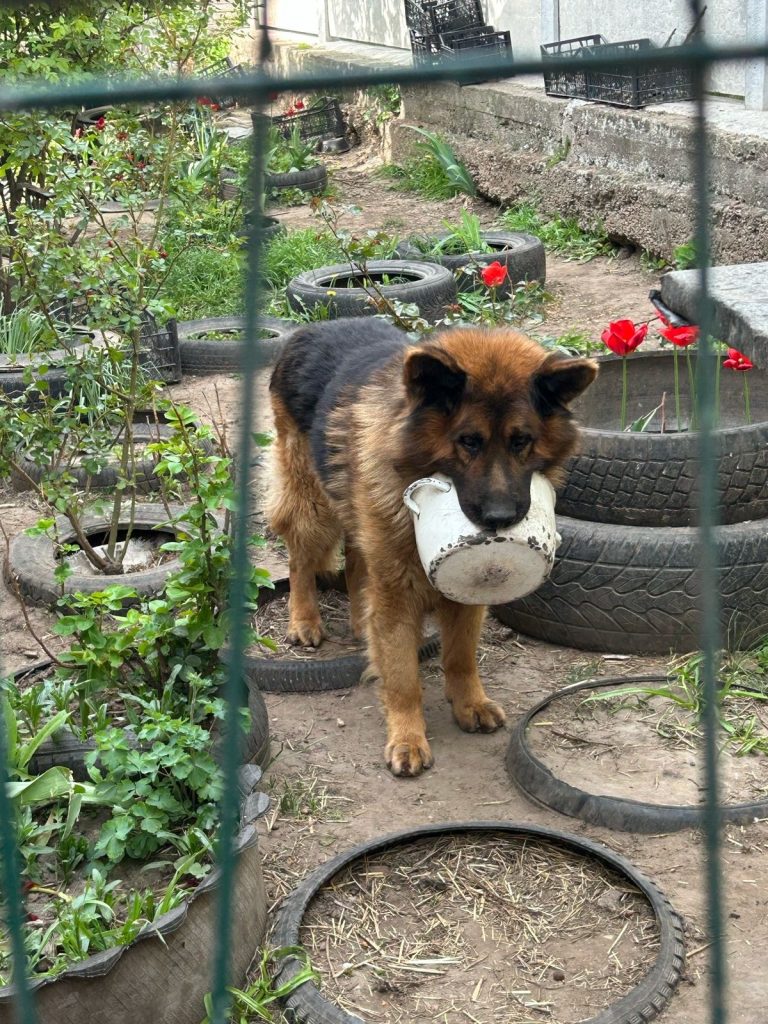
Rebecca Renmant-Oliver, who is based in the UK, has been one of the driving forces behind K9 Rescue Ukraine since its inception.
“It really started almost by accident,” she recalls. “When I first saw the awful scenes of animals being abandoned as people were forced to leave everything behind, I just couldn’t ignore it. I put a shout-out on Facebook asking for donations – food, beds, anything – and the response was overwhelming.”
What began as a simple plea for help has grown into a vital lifeline for countless dogs, cats, and even other animals such as horses and goats across Ukraine. Rebecca now spends much of her time collecting donations – food, veterinary supplies, bedding – and organising shipments of aid. Since the war began, she estimates she has sent more than a hundred tonnes of aid to Ukraine. However, more than three years into the war, the situation has become considerably more difficult.
“At the start, there was an incredible surge of support. People were heartbroken and wanted to help,” she explains. “But now, with war fatigue setting in, it feels like we’re shouting into the void. The war isn’t front-page news anymore, but the animals and their owners are still there. They still need us.”

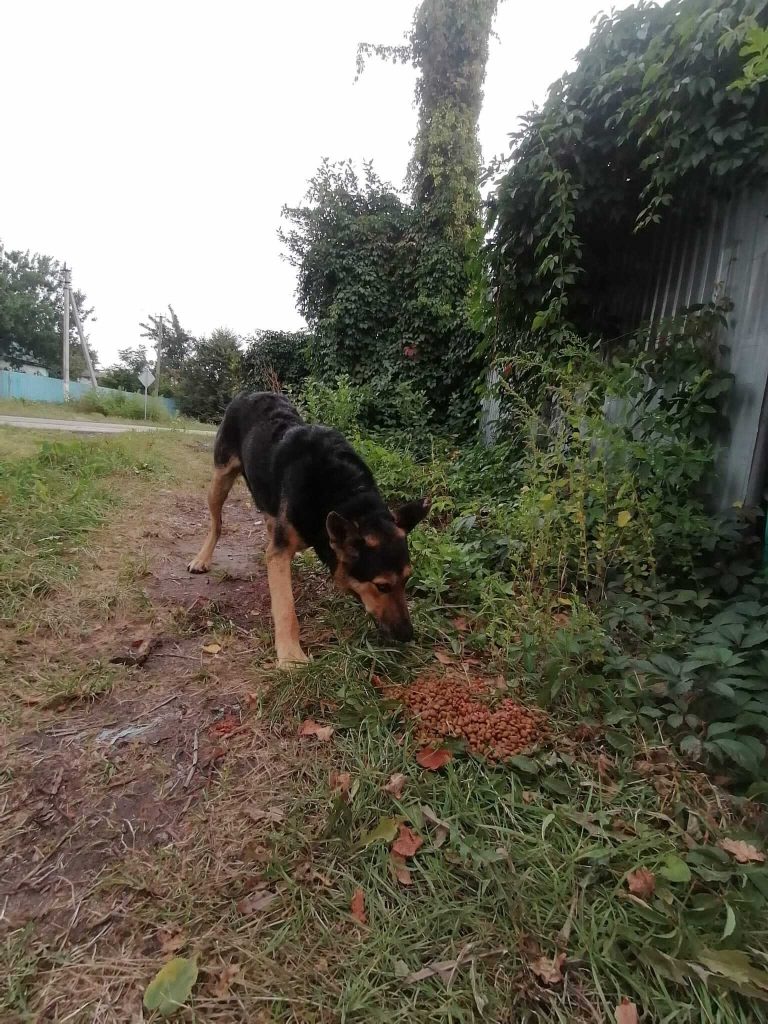
The challenges on the ground have only intensified. As the conflict drags on, more people are being evacuated or killed, leaving pets and stray animals behind to fend for themselves. In some villages, only a handful of people remain, often elderly residents or local volunteers doing what they can to feed abandoned animals.
Ukraine had a large stray population before the war; now that unneutered pets have joined them on the streets, the result is a growing number of feral dogs and cats.
“There are puppies and kittens being born who have never even been inside a home,” says Rebecca. “Some are completely feral, and the shelters are bursting at the seams. In some cases, the dogs are better off on the streets. It sounds awful, but at least out there they have some space, some freedom, and there are locals who can keep an eye on them, feed them, and offer basic treatment.”
Sterilisation efforts are ongoing but severely limited. Clinics struggle with power outages during operations, and veterinary supplies are scarce. “Parasite treatments are also a huge problem,” Rebecca adds. “We often have to rely on oral medicines because many of the dogs are too frightened for anyone to approach safely. Some of the photos we get of dogs covered in ticks are just heartbreaking.”

Despite the enormous hurdles, K9 Rescue Ukraine continues its work, focusing primarily on the essentials – food and medicine.
“It’s about survival at this point, keeping them fed, healthy, and alive,” Rebecca says.
One of the group’s most dedicated volunteers is Tom Bates, who frequently travels to Ukraine to deliver aid. His efforts have become almost legendary among supporters of the organisation. During last year’s catastrophic flooding in Kherson, following the destruction of the Kakhovka dam, Tom was on the ground, rescuing stranded dogs and cats – and, in one memorable instance, even transporting a donkey in the back of his vehicle.
“Tom’s incredible,” Rebecca says, “He’s transported just about everything you can imagine. The situations he finds himself in, you couldn’t make it up.”
But delivering aid into a war zone is no easy feat. Getting food and supplies across the border requires meticulous planning, not to mention a good amount of luck and determination. Rebecca relies heavily on donations of all sizes, from individuals sending a few tins of food to companies willing to donate larger supplies. She also maintains an Amazon wishlist, with every item purchased sent directly to her for sorting and packing.
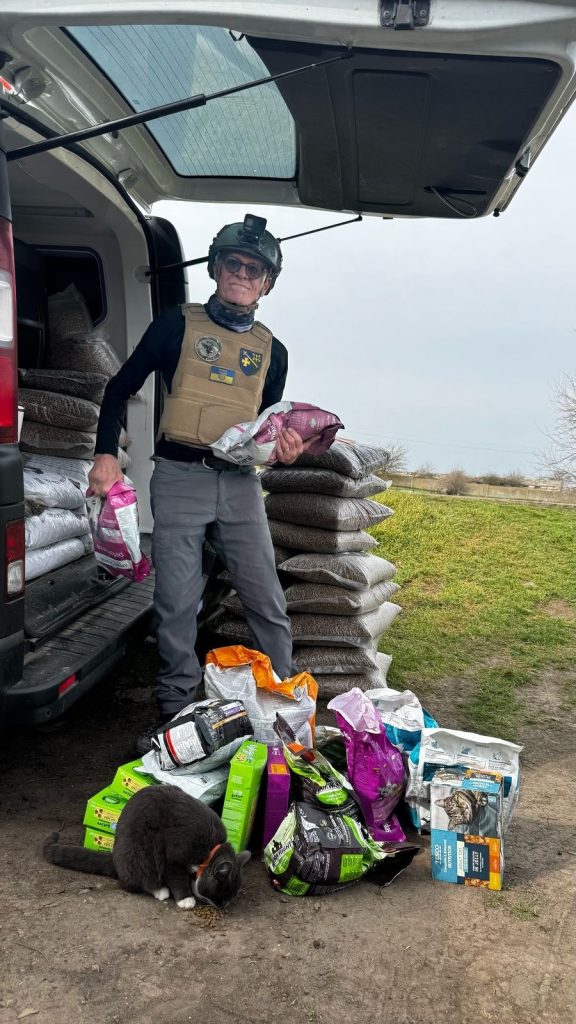
“I do everything from filling out the customs forms to physically boxing up donations,” she says. “When we have a vehicle available, we load it up and get it on its way to Ukraine.”
The urgency of their mission grows by the day. Russian forces are intensifying their assaults this summer, pushing deeper into Ukraine and putting even more people and animals at risk.
“When people are running for their lives, their pets are often the last thing they can think about, no matter how much they love them,” Rebecca explains. “It’s easy for us to think, from the safety of our home, that we’d never leave our pets behind – but imagine having minutes to leave, having to think of your family, of a spouse and children or perhaps elderly parents… I cannot judge the people who leave their pets behind in these circumstances. But we can try to help those pets. And as the situation worsens, it’s only going to get harder.”
Perhaps the biggest challenge K9 Rescue Ukraine now faces is breaking through the wall of public indifference that has grown over time.
“It’s always the same core group of people who respond,” Rebecca says. “We desperately need fresh support – more people willing to get involved, even just to donate a fiver a month. It would make such a difference.”
She believes that more prominent voices could help turn the tide.
“If celebrities or influencers spoke up about the situation – showed the work being done – it would help enormously. People need to see that this hasn’t ended. The animals are still there, still suffering, and still depending on us.”
Despite the setbacks and dwindling media attention, Rebecca and her small team remain determined to keep providing aid for as long as it is needed, no matter the obstacles.
“It’s not glamorous work,” she says. “There’s no big fanfare. But at the end of the day, we’re keeping animals alive. And that’s what matters.” A pause, then, “They have no one else.”
For those wishing to help, donations can be made via K9 Rescue Ukraine’s Amazon wishlist, or through direct contributions to support their ongoing work via their website or Paypal (K9rescueukraine@mail.co.uk).