

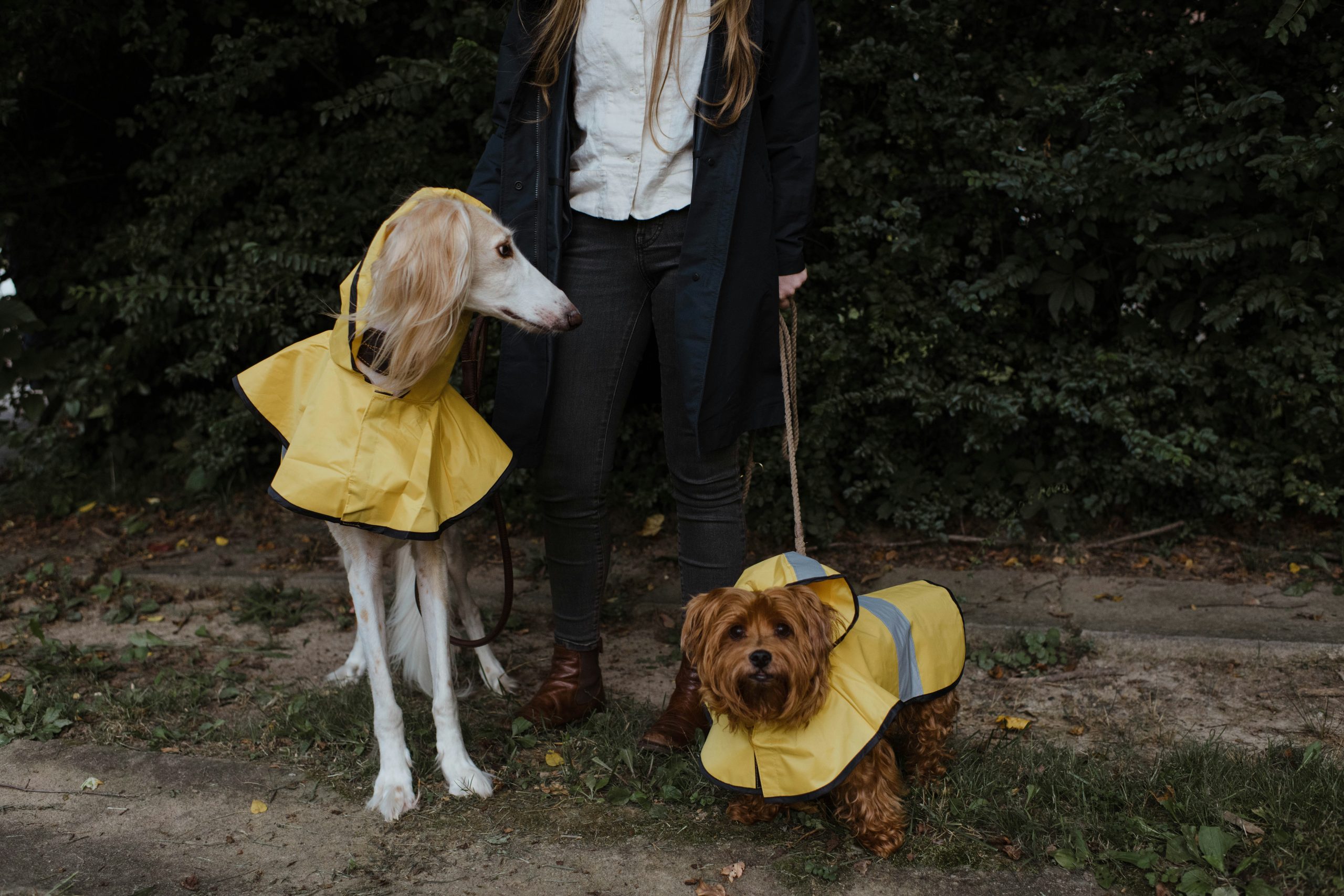
Dr. Anna Foreman, Everypaw Pet Insurance’s in-house vet, has issued an urgent warning to anyone planning to put their dog in a raincoat.
Some dogs don’t tolerate wearing coats and become stressed while they are being put on or while wearing them. They can injure themselves struggling to get out of them, and if coats become stuck over their head this can lead to asphyxiation.
Are dog raincoats necessary and how can you tell if your dog needs one?
Much like they help us, raincoats can help to keep a dog dry and warm in wet weather. Raincoats are appropriate for dogs who do not have an innately waterproof coat. The easiest way to find out is by exposing your dog to the rain (or a shower at home!) and then feeling under their fur to the skin underneath.
If their deeper fur and skin is dry and warm, their outer hair coat is keeping them dry. If the deeper fur and skin is wet or cold then this means an external waterproof coat may be more appropriate to keep them dry. Dogs who have recently been groomed or shaved (for example for a surgery) should also be protected against the rain.
Remember any dog has the potential to get wet and cold if they are completely submerged, if rain is particularly heavy or an animal is exposed to it for an extended length of time. If unsure, check the deeper layers and skin of your dog after a walk. If a dog is seen shivering on a walk, this is a definitive sign they are cold.
Remember dogs can also shake if anxious, and so shivering may not always be due to the cold.
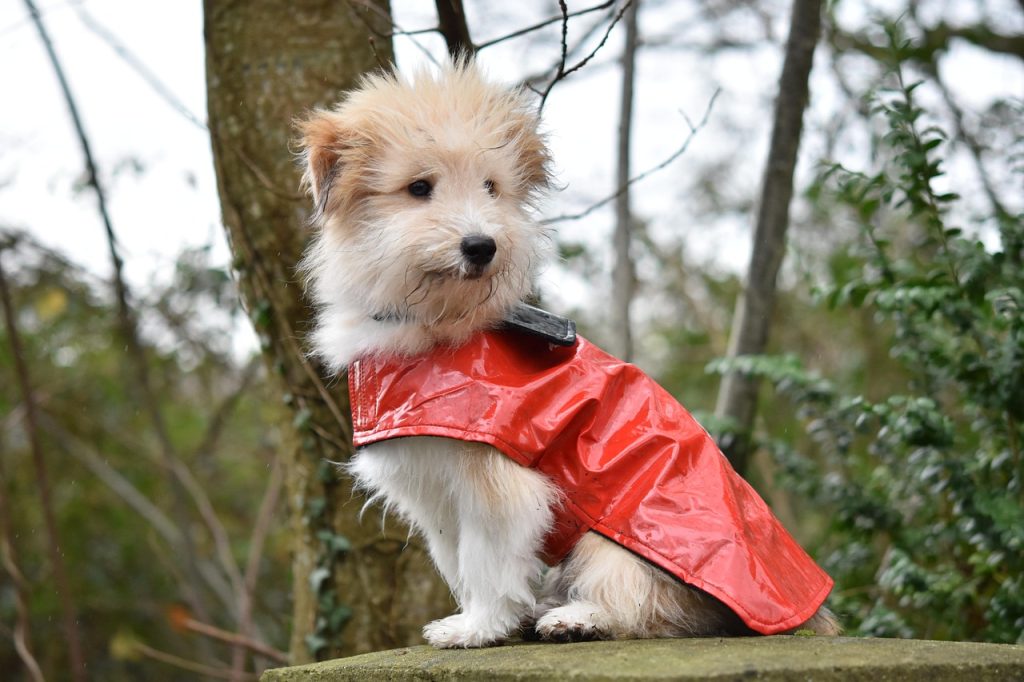
What do pet owners need to be careful of when putting their dog in a raincoat?
• Some dogs don’t need a raincoat. Some have naturally waterproof coats, and wearing a raincoat can either have no benefit, or lead to a dog becoming too warm. This particularly applies to double coated breeds.
• Some dogs don’t tolerate wearing coats and become stressed while they are being put on or while wearing them. They can injure themselves struggling to get out of them, and if coats become stuck over their head this can lead to asphyxiation.
What should you consider when buying a raincoat for your dog?
• Raincoats should be dog specific and made from a waterproof but breathable material.
• Raincoats can be a simple one layer or have a padded layer for extra warmth – care should be taken to choose the appropriate coat for the temperature.
• They should be easy to put on, and secure/not slip when worn. Older or arthritic dogs may benefit from coats which do not require them to bend their legs to put them on.
• Coats should have appropriate leg holes, and holes to allow for urination during a walk, particularly for male dogs!
What is your opinion on outdoor boots for dogs? Are they safe?
As long as owners wash and dry their dog’s paws thoroughly after a walk, there is no real need for outdoor boots. These boots are prone to causing a dog distress (dogs are not used to wearing shoes like we are), are easily lost, and are unnecessary in most cases.
Dogs’ feet have shoes already on them in the form of their pads. These hard, leathery ‘soles’ prevent injury to the softer skin surrounding and delicate structures underneath. They can be cut or penetrated with sharp objects, and so if a dog becomes suddenly lame, their pads should be checked thoroughly as well as the rest of their leg. If a dog is slipping in the wet, their pads are becoming chapped and sore, or the skin of their feet (or the dogs themselves!) are not tolerating being washed, boots can be considered.
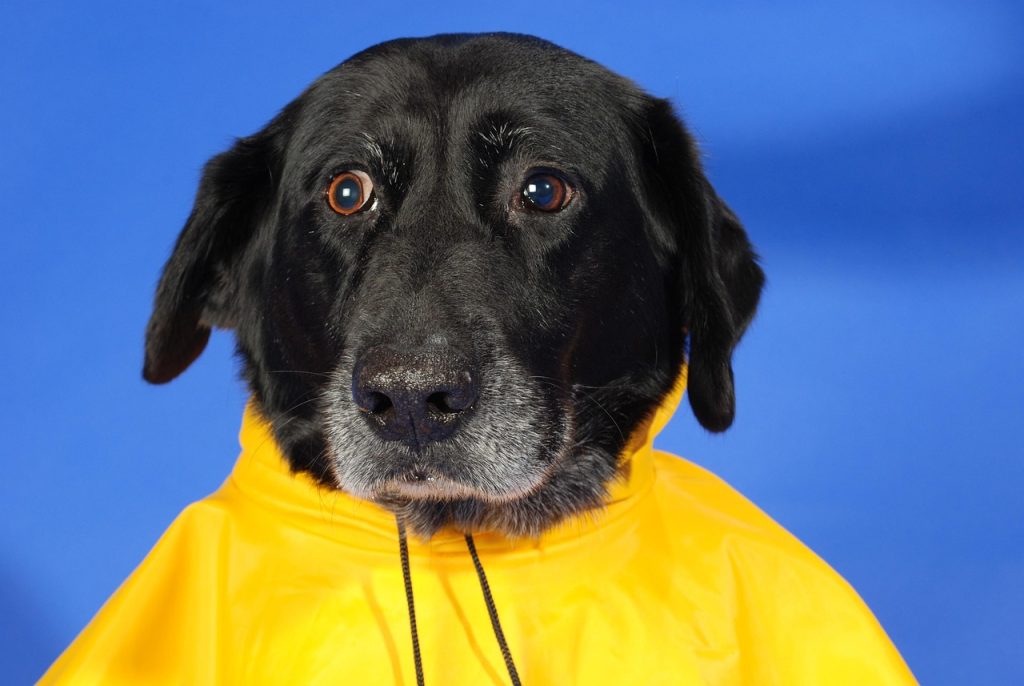
What should pet owners be careful of when walking dogs in wet weather?
• Some dogs love walking in the rain, others hate it, sometimes because it makes them feel wet and cold. Dogs with thin or no hair coats, or those who are naturally leaner (like whippets) are particularly prone to becoming cold in the rain. Those who are older or have health conditions are prone to becoming cold in the rain too.
• Rainy walks can be more dangerous for dogs. Reduced visibility can lead to injuries, and puddles can hide floor level dangers like broken glass. Drinking from puddles can lead to gastrointestinal upsets too.
• Extremely cold lakes can quickly plunge a dog into becoming sodden and cold very quickly as above. Waterproof clothing can also quickly weigh a dog down in the water. Care should be taken not to encourage play in such areas unless a dog has an innately waterproof and warm hair coat.
• If rain is extremely heavy (like in a storm), or if there are high winds, thunder or lightning, a dog walk should be avoided. Winds can lead to falling objects like trees which can cause injuries, and thunder can scare dogs, spooking them and leading to them running off.
How can pet owners keep their dogs safe and happy on wet dog walks?
• Most dogs are happy to go for walks in all weather conditions, however if not then try and ascertain the reason. Some dogs do not like the cold and it may be a simple case of fitting them with a coat. Some do not like getting their feet wet, and so pavement or gravel walking may be more appropriate.
• Make sure a dog is not too cold or too hot while walking. Some dogs have innately warm and waterproof coats, and so excessive layers can cause them to become uncomfortable and overheat
• Use of a high visibility collar, harness, lead, accessory, or coat makes dogs much more visible in really wet weather. This means we are less likely to lose them, and if they should run out into a road then traffic is more likely to avoid a collision with them
• Making walks more interesting with treat training or scent work can also help, particularly when limited to on the lead or pavement exercise in extreme weather conditions.
This is a guest post by Dr. Anna Foreman. Want to write for us? Visit www.dogstodaymagazine.co.uk/essay-submission or email editorial@dogstodaymagazine.co.uk.


