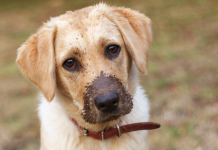
A virtual reality dog could one day be used as an educational tool to help prevent dog bites, thanks to an innovative project led by researchers at the University of Liverpool.
As part of a new pilot study, veterinary researchers have tested a virtual reality Labrador known as DAVE (Dog Assisted Virtual Environment). DAVE helped researcher explore if, and how, humans recognise and interpret signs of dog aggression.
Adult hospital admission rates for dog bites having tripled in England between 1998-2018, and researchers believed that better understanding of human-dog behavioural interactions could help tackle the growing problem. The use of a DAVE allows them to carry out their study without upsetting real dogs and potentially endangering people.

Dr Carri Westgarth, a Senior Lecturer in Human-Animal Interaction at the University of Liverpool. explains, “Dog bites are a common public health issue affecting human-dog relationships. Studying human behaviour around a dog performing aggressive behaviours is ethically difficult, for the sake of the risk to the person but also, we don’t want to be deliberately making dogs unhappy. A virtual dog solves these problems.”
The researchers recruited sixteen adults for a practical pilot study, having them to explore a virtual indoor living room woth DAVE in the opposite corner of the room. Participants were asked to recognise the signs of aggressive behaviours displayed by the virtual dog – including licking its lips, yawning, front paw lifting, backing away, barking, growling, and showing of teeth.
Three participants got close enough to the aggressive virtual dog to get bitten
The researchers also assessed participant proximity to the dog. Most participants got closer to the non-reactive dog and kept away from DAVE when it showed signs of aggression. However, three participants got close enough to the aggressive virtual dog to get bitten.
PhD student James Oxley said, “This is a novel pilot study which overcomes the challenges associated with assessing human behaviour around real dogs displaying aggressive behaviour. Our findings highlight the potential that the virtual reality model has to help us better understand human behaviour in the presence of dogs and our interpretation of dog behaviour.”

The model was developed in collaboration with the University’s Virtual Engineering Centre (VEC) and supported and funded by Dogs Trust. Paula Boyden, Dogs Trust Veterinary Director, said, “As well as striving to provide the best possible welfare for the dogs in our care, Dogs Trust invests in funding research that aims to improve the lives of dogs for generations to come through our Canine Welfare Grants (CWG) programme.
“We were delighted to fund the University of Liverpool DAVE Pilot, its potential to provide a fascinating insight into human-canine interactions is clear. We hope that DAVE will be developed into an education tool to teach people how to be safe around dogs.
“Before a bite occurs, a dog will often display subtle behaviours to indicate that it is uncomfortable and does not want to be approached. By educating people about these behaviours, we hope that incidences of dog bites can be significantly reduced.”