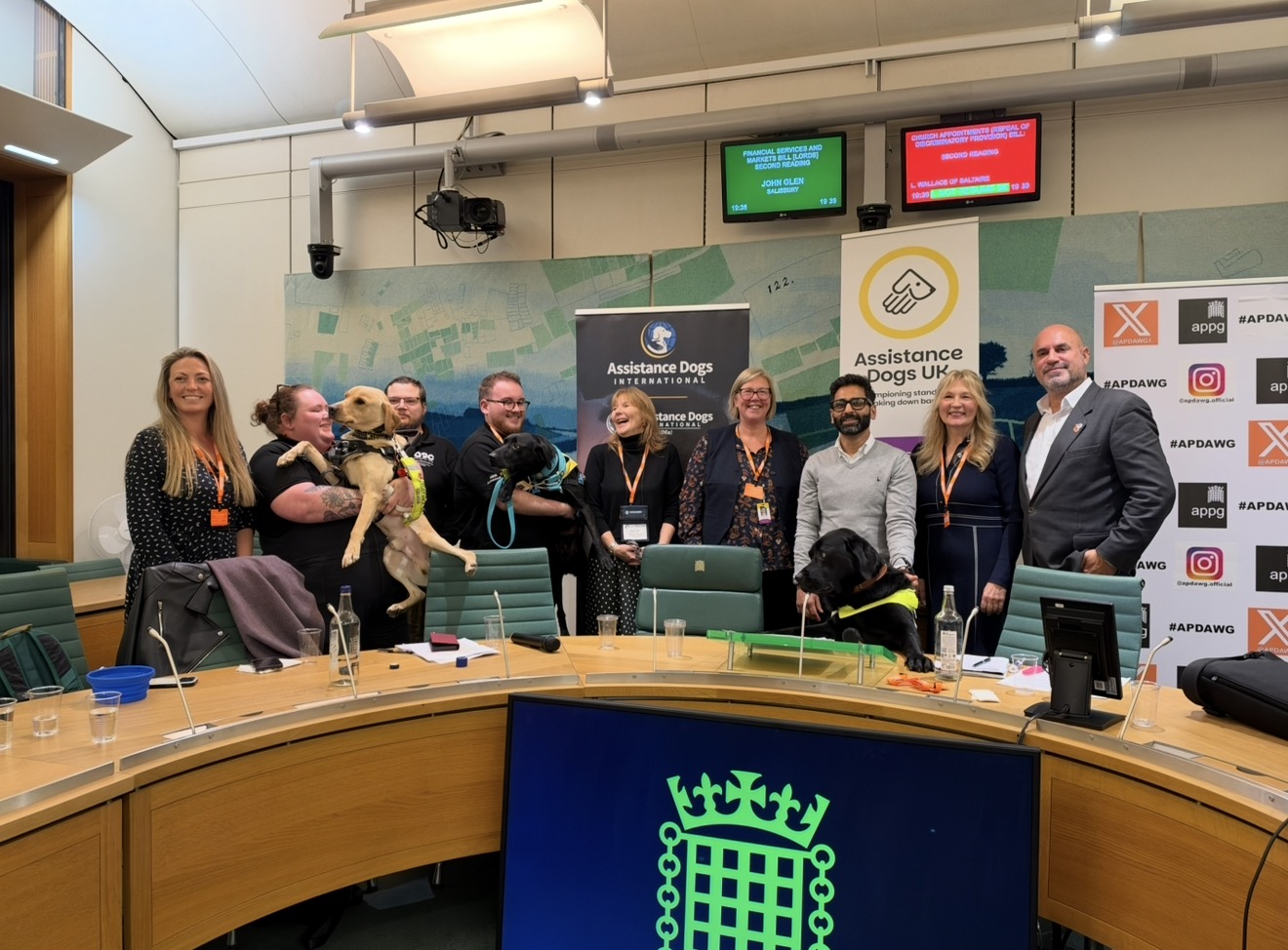
Animal welfare campaigner Marc Abraham OBE chaired a meeting of MPs, disability advocates and assistance dog organisations at Westminster on Tuesday (November 10) at the All-Party Parliamentary Dog Advisory Welfare Group (APDAWG).
The assistance dog event, now in its third year, heard emotional testimony from people whose skilled dogs have transformed their lives, only for them to face humiliation, confrontation and discrimination when trying to access everyday services.
According to research presented by Assistance Dogs UK and Assistance Dogs International, an astonishing 79 per cent of assistance dog handlers surveyed in the UK reported being refused access during 2024, the highest figure recorded globally.
Worldwide, 43 per cent of respondents had experienced access refusals, while 40 per cent had considered avoiding public places altogether.
Campaigners warned that despite protections under the Equality Act 2010, the situation is getting worse rather than better.
They are now calling for a clear legal definition of an assistance dog, consistent training and welfare standards, better education for businesses and stronger penalties for discrimination.
The meeting was opened by APDAWG founder Marc Abraham OBE, who introduced the group’s parliamentary chair, Labour MP Irene Campbell.
Representatives of Assistance Dogs UK and Assistance Dogs International then outlined the scale of the problem.
Vicki Worthington, executive director of Assistance Dogs UK, which represents 22 organisations, said handlers were being challenged and turned away despite having trained their dogs and understood their legal rights.
She described how one assistance dog handler had been forced to stand outside a shop simply to buy a bottle of water.
She said: “Three years on and actually we’d love to stand here and say things are improving, but they aren’t, they’re getting worse.”
Vicki explained that businesses were also struggling because staff were unsure which dogs qualified as assistance animals, what questions they could legally ask and how to comply with equality legislation.
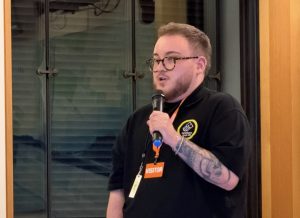
She added that seeking justice through the courts was often so confusing, expensive and exhausting that many disabled people simply gave up.
Together with Assistance Dogs International representative Steph Akin, she called for a proportionate and inclusive system recognising all legitimate, highly trained assistance dog partnerships, regardless of how their dogs had been trained.
‘I shouldn’t have to fight just to buy some milk’
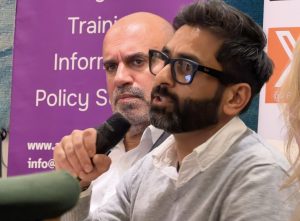
Among the speakers was former trauma doctor and author Amit Patel, who lost his sight in 2013.
The author of Kika and Me described how his guide dogs had restored his independence after he was forced to abandon his medical career.
But he said the freedom they provided was frequently undermined by discrimination.
He recalled being confronted by a trader who refused to allow his guide dog inside, despite other shoppers intervening on his behalf.
The experience left him feeling humiliated.
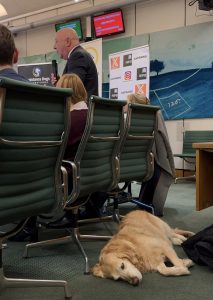
Amit explained that even something as simple as meeting friends for dinner could involve worrying whether he would be allowed through the door.
He said assistance dog handlers should not have to plan their lives around the possibility of being refused entry.
Liberal Democrat MP Steve Darling, who represents Torbay, spoke about the extraordinary difference his guide dog Jenny has made to his life.
The MP, who has deteriorating vision, described Jenny as an invaluable companion who helps him navigate unfamiliar buildings, busy streets and the corridors of Westminster.
But he revealed that he too had experienced discrimination.
At one hotel, he was asked to sit away from the self-service breakfast area because of his dog.
After challenging the decision, the manager apologised.
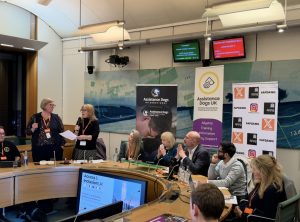
In another incident, Steve and his wife took legal action following discrimination at a restaurant, eventually securing £2,000 for charities chosen by his wife.
He explained that access refusals were emotionally damaging even for someone accustomed to public scrutiny and difficult situations.
He said: “It gnaws at you internally as an individual when you get a refusal because it does, it hurts you.”
The MP argued that disabled people should not be expected to fight expensive civil court battles simply to exercise their rights.
He called for legislation with meaningful consequences for those responsible for unlawful discrimination.
One of the evening’s most moving contributions came from young composer and Assistance Dogs UK ambassador Noah Capon, who spoke about his autism assistance dog Moose.
Before Moose arrived, Noah explained that severe sensory overload meant he could not leave home without his mother or another trusted person accompanying him.
Busy environments could trigger overwhelming anxiety, panic attacks and shutdowns, leaving him unable to communicate or process his surroundings.
He feared he would never experience the independence enjoyed by his friends.
But Moose, who is trained to recognise distress, provide deep-pressure therapy, interrupt harmful behaviours and help Noah regulate his emotions, has enabled him to build a life he once thought impossible.
Since being partnered with Moose, Noah has completed a master’s degree at a leading music conservatoire, had his compositions published and performed, developed friendships and relationships, and become increasingly independent.
He described the enormous personal achievement of recently completing a supermarket shop alone for the first time.
He even kept the receipt as a treasured reminder of how far he had come.
But he told MPs that the confidence he had worked so hard to build could be shattered in seconds when staff challenged his right to enter premises with Moose.
He described being separated from his family in a restaurant, confronted by security staff, asked to produce documents to prove his dog’s status and even refused medical treatment.
He said: “When this happens I feel incredibly small and I want to run away.”
He added that the fear of confrontation now sometimes overshadowed the very independence Moose had helped him achieve.
Noah urged businesses to train staff properly, explaining that even when a manager eventually allowed him inside, the emotional damage had already been done.
Holly Bluett, UK country case manager for the Assistance Dog UK, described similarly distressing experiences reported to her organisation.
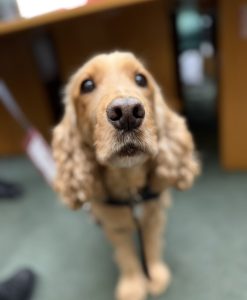
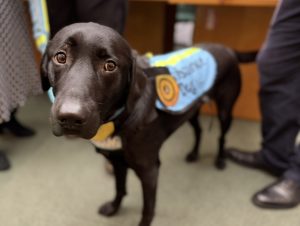
Accompanied by her own assistance dog Max, she explained that the council supports handlers facing discrimination, provides training and advice, and intervenes directly with businesses.
One case involved a disabled person allegedly being refused essential hospital treatment because staff feared another patient might be allergic to their assistance dog.
The handler was then reportedly recorded as having refused treatment themselves.
Another person had been forced to leave higher education following ongoing discrimination, while others had experienced harassment at GP surgeries and refusals at shops and pubs.
Holly said: “I shouldn’t have to disclose my disability to get in the door.”
She warned that repeated discrimination could lead to anxiety, depression, social isolation and loss of independence.
Holly, whose own assistance dog is trained to provide medical alerts for a severe food allergy, said she had also experienced discrimination firsthand.
She explained her work to support handlers regardless of whether their dogs have been trained by established charities or through other legitimate routes.
The organisation also provides a membership card scheme giving handlers access to support when they encounter discrimination, including a telephone contact for assistance outside normal working hours.
She called for changes to Section 173 of the Equality Act, arguing that its existing definition covers only around 40 per cent of assistance dog handlers.
Campaigners said the narrow definition also has implications for protections under dangerous dogs legislation when assistance dogs are attacked.
The meeting also heard from Jane Cooper, founder and managing director of Access & Inclusion UK, who explained that the tourism and hospitality sectors were eager to find a solution.
Jane acknowledged that tourism businesses were among those most frequently associated with assistance dog access refusals, but stressed that many employers genuinely wanted to provide an inclusive welcome.
She said the lack of clear legislation and guidance left businesses uncertain about their responsibilities.
Confusion over emotional support animals, concerns about hygiene and safety, and inconsistent policies were contributing to the problem.
She pointed to examples of good practice, including the National Trust’s generally trust-based approach to recognising assistance dog partnerships.
Jane said tourism organisations, including the National Trust, Merlin Entertainments and Glasgow Life, had been involved in discussions about possible reforms.
The industry’s priorities included a statutory definition of assistance dogs, recognised training and welfare standards across all legitimate training routes, practical guidance for staff and a clear timetable for change.
She explained that discussions had already taken place through the England Inclusive Tourism Action Group, with correspondence involving Sir Stephen Timms, Minister of State for Social Security and Disability, and a roundtable planned for 2026.
Jane warned that the absence of a timetable should not become an excuse for inaction.
She said: “I don’t think that’s a reason to kick the can down the road.”
Conservative MP George Freeman, who represents Mid Norfolk, arrived during the meeting and pledged his support for the campaign.
He spoke about having three blind cousins and a wife who uses an assistance dog, saying he understood the difficulties handlers faced when visiting restaurants, pubs and other public places.
The former government minister praised his cousins, describing how they had overcome challenges and raised money for charity.
He said their experiences had inspired him and that he was keen to help secure change.
Declaring himself “reporting for duty”, he offered to support a cross-party campaign to strengthen legal protections for assistance dog handlers.
His intervention was welcomed by campaigners, who are seeking support from MPs across the political spectrum.
During questions, attendees called for tougher enforcement, including criminal consequences for unlawful access refusals.
They highlighted the difficulty of pursuing discrimination claims through the civil courts, with some cases taking months to progress.
One speaker described how a legal case had stalled for weeks, with no clear indication of when the court would take further action.
Concerns were also raised about gaps in taxi and private hire legislation, particularly in London, where campaigners said handlers with dogs trained outside certain recognised charities could struggle to secure enforcement action.
Speakers argued that the existing legal definition of assistance dogs needed to be broadened to ensure equal protection for owner-trained, privately trained and charity-trained partnerships.
They also warned that the same narrow definition affected which assistance dogs received specific protections under dangerous dogs legislation.
Campaigners want changes to the Equality Act, including Section 173, alongside stronger enforcement measures to ensure businesses cannot simply ignore their legal responsibilities.
The meeting heard that campaigners had spoken to MPs ahead of the event and believed there was growing parliamentary support for reform.
The possibility of launching a government petition was also discussed, with attendees reminded that petitions reaching 10,000 signatures receive a government response, while those reaching 100,000 are considered for parliamentary debate.
Assistance Dogs UK announced plans to publish a new access survey before the end of the year, inviting responses from handlers across different training routes.
The organisation hopes the findings will provide further evidence of the barriers disabled people face and help strengthen the case for legislative reform.
Speakers also stressed the importance of working collaboratively with businesses, disability organisations, assistance dog charities, owner-trainers and politicians.
With Assistance Dogs International adopting the theme Better Together, campaigners said a united approach would be essential to achieving meaningful change.