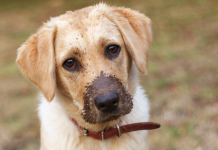
A Labrador from Norwich can once again run and play after undergoing pioneering surgery using 3D-printed technology to correct a severe limb deformity.
Floyd, a three-year-old male Labrador, was born with a condition that caused his wrists and feet to turn outwards, making it increasingly difficult for him to walk. Initially managing without discomfort, his condition worsened over time, requiring pain relief.
His owners, Greta White and James Walker, sought veterinary advice, leading them to Grove Veterinary Hospital in Fakenham.
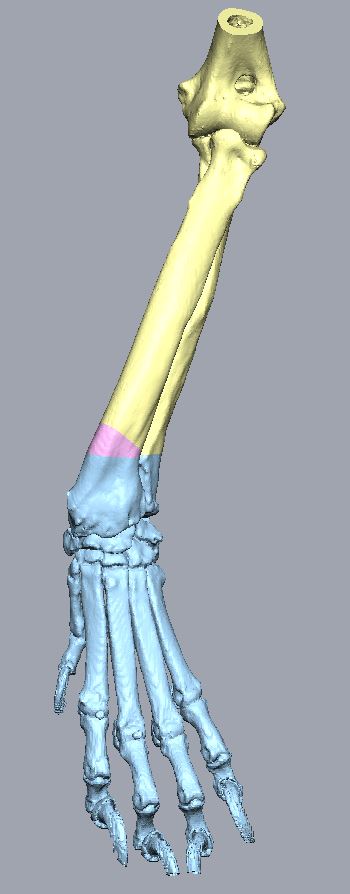
CT scans at the hospital confirmed Floyd was suffering from ‘carpal valgus’, a forelimb deformity caused by abnormal growth of the radius and ulna bones. The veterinary team collaborated with Bill Oxley at Vet3D to plan a surgical correction using 3D-printed guides, allowing precise realignment of Floyd’s bones.
Specialist surgeon James Tattersall led the procedures, operating on each of Floyd’s front legs four weeks apart. The 3D-printed cutting and reduction guides enabled the bones to be repositioned and stabilised with plates and screws. Floyd showed immediate improvement after the first surgery and was walking on all limbs within days. Over three months, he fully recovered and is now able to move comfortably.

His owners said, “A big thank you to James and to all the fantastic team at Grove Veterinary Hospital. Thank you for giving our Floyd the best chance of having a wonderful active life and for having taken care of him when he was feeling poorly and scared. We are all forever grateful to you. Floyd is happier and more mischievous than ever!”
James Tattersall said, “Floyd’s leg deformity was challenging. However, the use of this pioneering new 3D-printed technology has revolutionised the way we now treat limb deformities. It’s significantly enhanced the accuracy of this complicated surgery and dramatically improved the outcome. It is so rewarding to see a happy patient following such a life-changing procedure.”