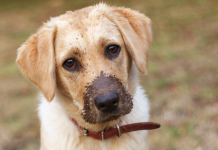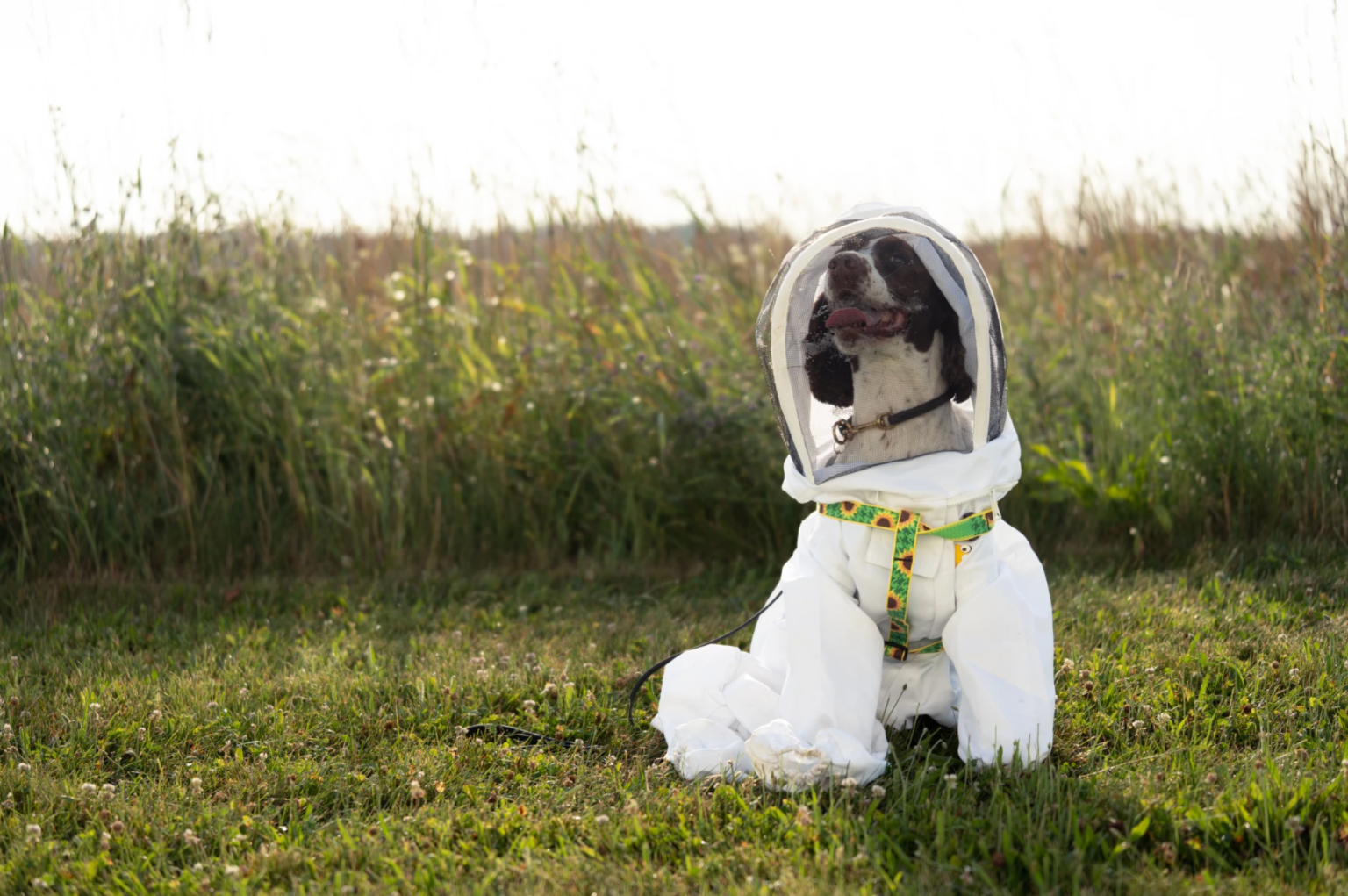
It is not every day you see a dog in a bee suit. But at Michigan State University’s (MSU) Pollinator Performance Center, Maple – a nine-year-old English Springer Spaniel – makes it look almost routine. With her ears tucked beneath a mesh veil and tail wagging furiously, Maple trots towards a row of empty hive boxes, nose twitching in anticipation. Somewhere among them lies the faint trace of a deadly disease.
Maple’s job is simple but crucial: to sniff out American foulbrood (AFB), a highly contagious bacterial infection that devastates honeybee colonies. When she stops abruptly, sits, and raises a paw, it means she has caught the scent. Her handler, Sue Stejskal, offers a toy as a reward, and Maple bounds off happily. For the bees, and the people who depend on them, her work is no game.
Stejskal, an MSU alumna with years of experience training working dogs, is leading the effort to adapt canine scent detection to apiculture to sniff out some of the most devastating diseases. For Maple, the challenge of tracking down bacteria in hives is simply another puzzle to solve – one that comes with the added novelty of her custom bee suit! – but for bees, it can make a huge difference.
A single trained dog can inspect many colonies in the time it takes a human to examine just a few.
AFB is caused by spore-forming bacteria that target honeybee larvae. Left unchecked, it can wipe out colonies and spread rapidly between hives. Traditionally, the responsibility for spotting the disease falls on beekeepers, who must open hive after hive in painstaking manual inspections. With hundreds of colonies to check, the process can take days – and in that time, infections may advance unnoticed.
Dogs like Maple could change that. With their exceptional sense of smell, they are able to detect the faintest traces of AFB in minutes. A single trained dog can inspect many colonies in the time it takes a human to examine just a few. That efficiency could prove invaluable to commercial beekeepers and researchers alike, helping to stop outbreaks before they escalate out of control and wipe out entire colonies.
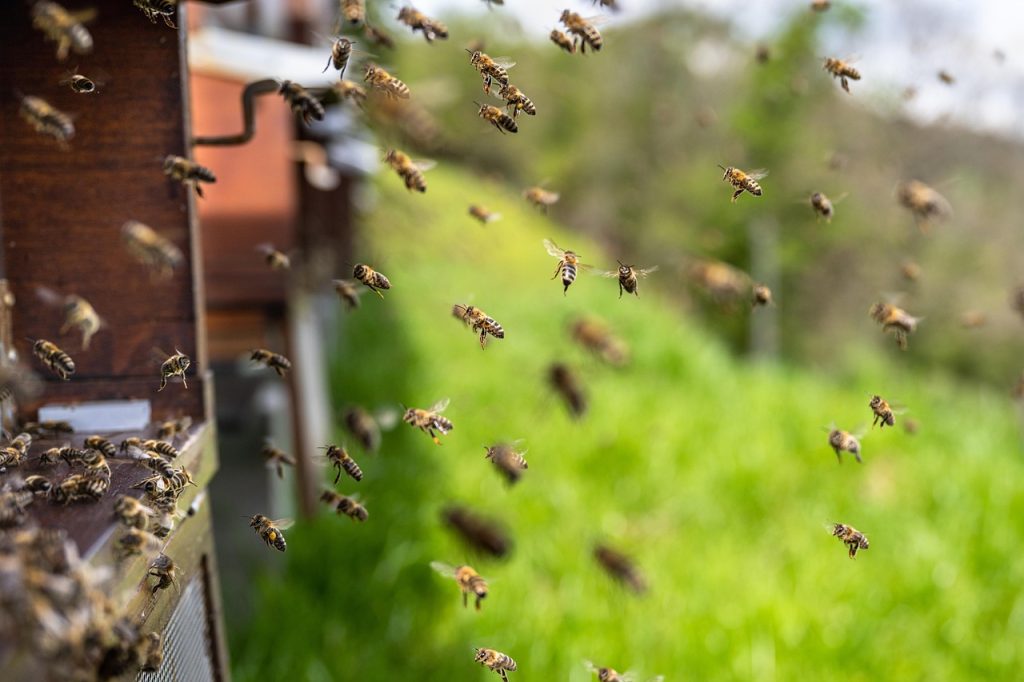
During the summer months, the centre manages around 10 million bees across several sites on MSU’s south campus. Students studying veterinary medicine, entomology, and animal science all have opportunities to work with the colonies – and now, with Maple as well. Maple may not know the full significance of her work, but she relishes every moment. After a training session, she sheds her bee suit and chases a chew toy across the grass. Her tail wags just as furiously as when she is at the hives. For Stejskal, each successful detection is both the culmination of years of training and a tangible step forward in protecting pollinators.
Maple did not always work to protect bees; in fact, this is her second career. She once served as a K-9 police dog, trained to locate missing persons, until an accident during a search left her injured and unable to continue in law enforcement. After rehabilitation with MSU veterinarians, she found a new calling at the Pollinator Performance Center – showing once again that there is very little a dog can’t sniff out!
The Pollinator Performance Center, established in 2021, provides a hub for pollinator health studies. With support from the Michigan Alliance for Animal Agriculture, the research team is developing standardised training protocols for scent-detection dogs in apiculture. These guidelines will help other handlers and beekeepers replicate Maple’s success with new canine recruits.
This could have a game-changing impact in the fight to save the bees. According to the Honeybee Health Coalition, the situation is dire: earlier this year, they confirmed a staggering loss of 1.6 million colonies in the US alone, with commercial beekeepers sustaining an average loss of 62% between June 2024 and March 2025.
This is far from a US-only problem: across the globe, honeybees are under pressure from disease, pesticides, and habitat loss.
Danielle Downey, executive director of Project Apis m., said, “In January 2025, beekeepers across the country began reporting unexpected large-scale honey bee losses – we now know the largest ever recorded in the US.”
Without immediate intervention, experts warn, the ripple effects could drive up costs for farmers, disrupt food production, and shutter many commercial beekeeping operations.
“Beekeeping businesses are facing unprecedented challenges that threaten their survival from colony losses we haven’t seen in nearly 20 years,” said Patty Sundberg, President of the American Beekeeping Federation.
This is far from a US-only problem: across the globe, honeybees are under pressure from disease, pesticides, and habitat loss. Calls to “save the bees” are echoing worldwide, and for good reason: honeybees pollinate a vast proportion of the crops that sustain human diets. Without them, food systems would face enormous strain.
Ensuring their survival demands innovation… and sometimes, that innovation comes with floppy ears and a wagging tail. After all, saving pollinators requires every ally available – whether they have wings, stethoscopes, or wet noses.