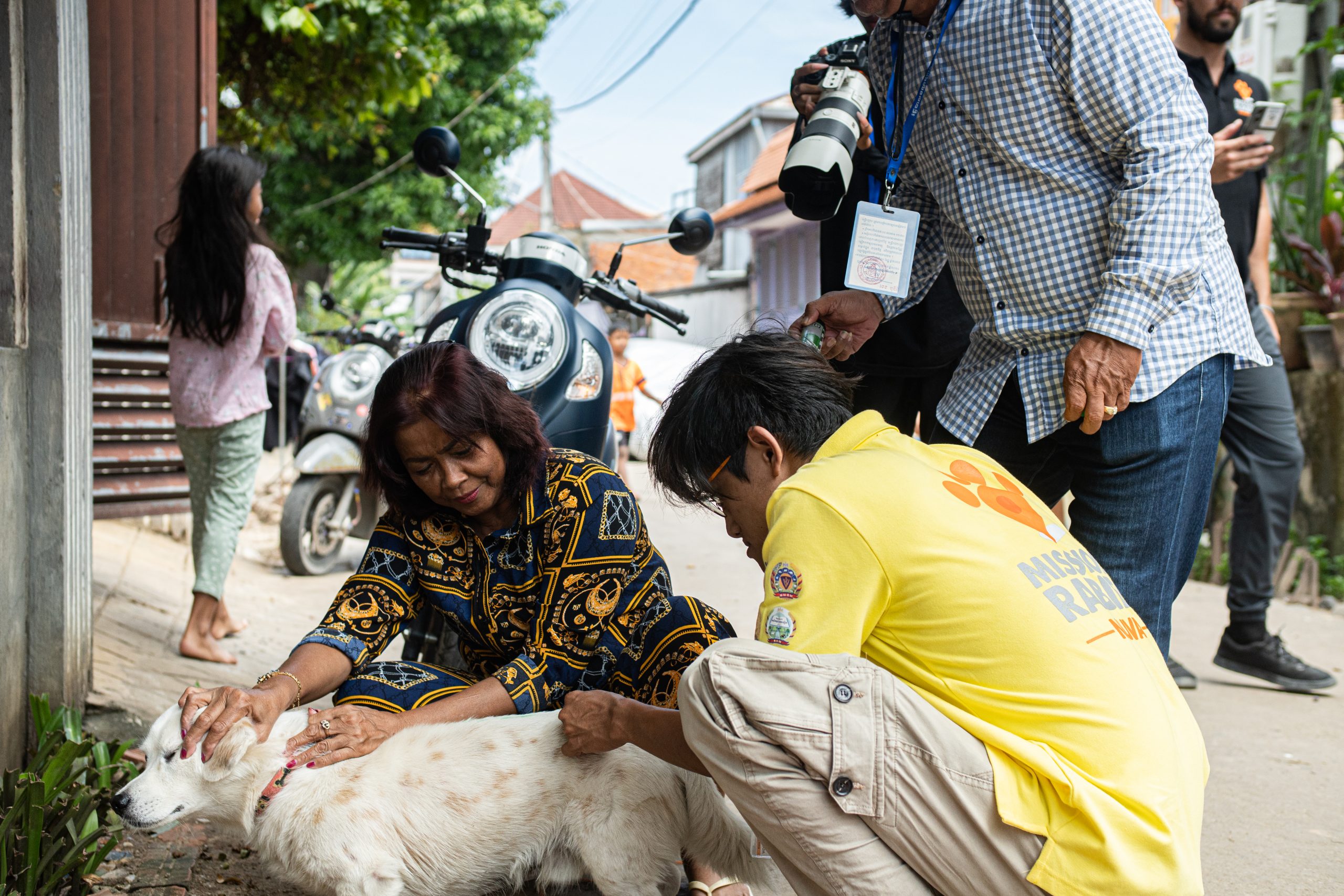
In a two-week campaign led by UK-based Worldwide Veterinary Service (WVS), 229,488 dogs were vaccinated against rabies in Cambodia, marking the largest rabies vaccination effort in Asia.
The vaccination drive, held between 21 October and 4 November, was part of the Mission Rabies initiative and closely aligned with Cambodia’s “National Strategic Plan for Rabies Control and Elimination.” Working in partnership with the General Directorate of Animal Health and Production (GDAHP) and Animal Rescue Cambodia, the effort aimed to safeguard both human and animal lives from the deadly virus.
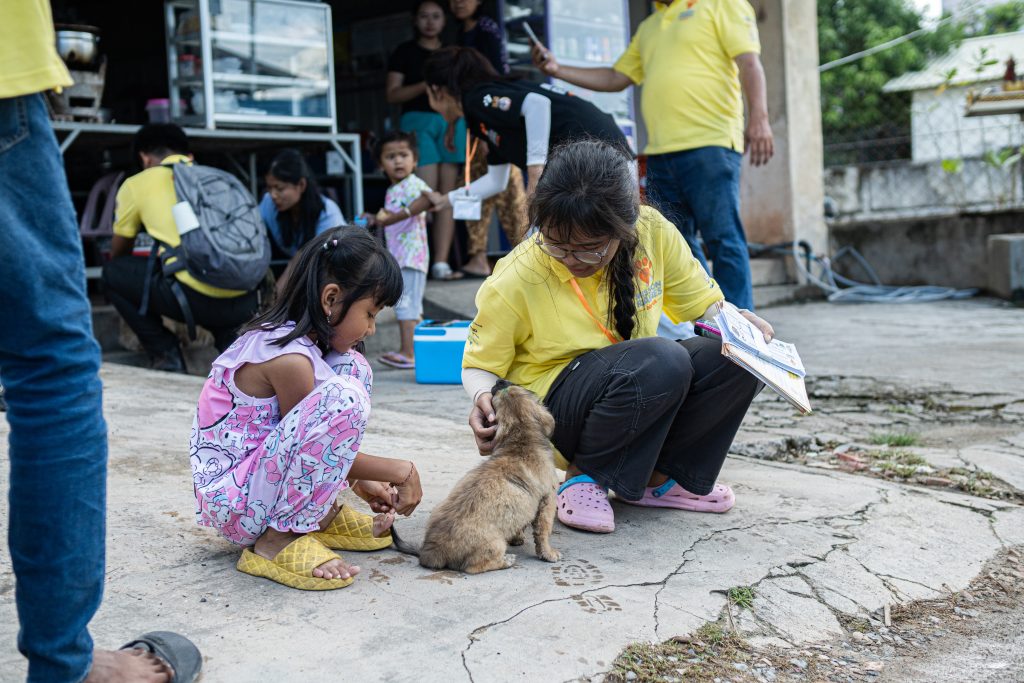
The campaign involved around 300 vaccination teams, deployed across the provinces of Phnom Penh, Kandal, and Battambang. Teams worked to administer vaccines in communities to halt the spread of rabies and reduce the risk to humans, especially vulnerable children. The project follows a 2023 campaign that vaccinated 74,983 dogs across Phnom Penh and Kandal, laying a foundation for expanded efforts in 2024.
“It proves that with the right strategy, energy, and support, eliminating rabies is within reach”
Dr Luke Gamble, CEO and Founder of Worldwide Veterinary Service, said, “When we launched Mission Rabies in 2013, our goal was ambitious – to vaccinate 60,000 dogs in 30 days. Many thought it couldn’t be done, but we managed 64,000. Ten years later, we’ve just completed our second year in Cambodia, where, remarkably, we vaccinated over 82,000 dogs by day four alone.
“This achievement is a testament to the unwavering dedication of our incredible team and a tribute to the veterinary profession, with vets and nurses from around the world pouring their energy into making a profound impact. It’s no exaggeration to say this campaign will prevent around 500 children from dying of rabies over the next few years. Vaccinating 229,488 dogs in Cambodia in just two weeks is a new milestone we’re immensely proud of.
“It proves that with the right strategy, energy, and support, eliminating rabies is within reach. It’s a privilege to be part of this journey, and we are deeply grateful to our partners and everyone backing our mission to end human rabies deaths worldwide.”
Rabies remains a significant public health issue in Cambodia, where the disease’s fatal nature presents a particular risk to children. According to the World Health Organisation, over 99% of human rabies cases arise from dog bites, with children under 15 representing 40% of global fatalities. Cambodia has one of the highest rabies death rates per capita in the world, making preventative measures, such as mass vaccination and public awareness, crucial.
Without immediate post-exposure prophylaxis, a rabid dog bite can lead to clinical symptoms that almost always result in death. To combat this, Mission Rabies aims to vaccinate at least 70% of the canine population in areas where it operates, the threshold necessary to interrupt disease transmission in dogs and prevent subsequent human cases.
Throughout the two-week campaign, teams undertook door-to-door efforts, travelling through the designated vaccination zones to reach as many animals as possible. WVS also employed its proprietary “rabies app,” a digital tool that assigns specific areas to teams, tracks vaccination numbers, and provides real-time data on the drive’s progress. This innovative approach allows for efficient coordination and oversight of vaccination efforts, optimising resources and capturing essential data for future initiatives.
“Through large-scale vaccination, education, and rabies surveillance, we can protect so many lives and stop this deadly disease for good”
Mission Rabies first launched its operations in Cambodia in 2019 with a pilot vaccination programme and an educational initiative centred in Phnom Penh. Since then, the organisation’s 24-hour surveillance team has responded to reports of rabid dogs, assisting anyone bitten with post-exposure treatment and offering a helpline for the public to report rabid dog sightings and receive support for rabies-related emergencies.
Dr Amy Nicole Lewis, International Project Manager at Worldwide Veterinary Service, said, “The lack of awareness about this deadly disease means that many bitten individuals do not receive the post-exposure treatment they need, leaving them with no chance for survival once symptoms manifest. Tragically, children are particularly vulnerable to rabies as they are less likely to recognise the signs of rabies in dogs and are more likely to interact with or care for these animals.
“By achieving at least 70 percent vaccination coverage in dog populations within rabies-affected areas creates herd immunity, stopping the dogs transmitting the disease to humans. Through large-scale vaccination, education, and rabies surveillance, we can protect so many lives and stop this deadly disease for good.”

The vaccination campaign in Cambodia also included an educational programme aimed at increasing public awareness of rabies prevention and the importance of vaccinating dogs. Teams conducted educational visits to schools, workplaces, and key community locations, providing information on the risks associated with rabies, preventative measures, and the need for annual vaccinations.