“All my dogs love cheese and will have a sneaky slurp of my milky tea if I don’t keep a close eye on them. Could I be giving them a tummy ache?” asks editor Beverley Cuddy…
I know the rule is not to give too many fatty foods, as pancreatitis is ghastly, but can dogs process dairy? Experts estimate about 68 per cent of humans have lactose intolerance. But it’s much more common in some parts of the world than in others. In Africa and Asia, for example, most people have lactose malabsorption. Why is that?
Professor Mark Thomas from UCL said, “In late pre-history, as our ancestors started living in larger settlements, their health was increasingly impacted by poor sanitation and increased pathogen loads. Under such conditions, even more so during times of famine, consuming milk would have increased death rates, particularly among those unable to digest the lactose in milk. Those who were able to digest lactose were thus more likely to pass on their genes, enabling them to safely drink milk.”
Most commercial dog milks are based on goat’s milk, not cow’s milk, as that is much more likely to be tolerated
His study revealed that most European adults have genetically evolved to be able to drink milk without discomfort. For those unlucky to not have the genetic adaption, they can’t digest lactose – which is a unique sugar, and it causes cramps, diarrhoea and flatulence.
Professor George Davey Smith, director of the MRC Integrative Epidemiology Unit at the University of Bristol, and a co-author of the study, said, “A genetic trait called lactase persistence has evolved and spread in various milk-drinking populations in Europe, central and southern Asia, the Middle East and Africa. Today, around one third of adults in the world are lactase persistent.”
But what about dogs? Have they been getting more lactose tolerant, too? After all, they are amazingly genetically flexible; look how they have evolved into so many different sizes and shapes.
A group of scientists published a paper looking at exactly this in Molecular Biology and Evolution. They discovered lactase persistence adaption in European dogs. They compared the genomes of 242 European dogs, 38 south-east Asian indigenous (SEAI) dogs, and 41 grey wolves to discover if European dogs had made any adaptions. They found 86 unique positively selected genes in European dogs, among which is LCT, which encodes lactase, which is needed for the digestion of lactose.
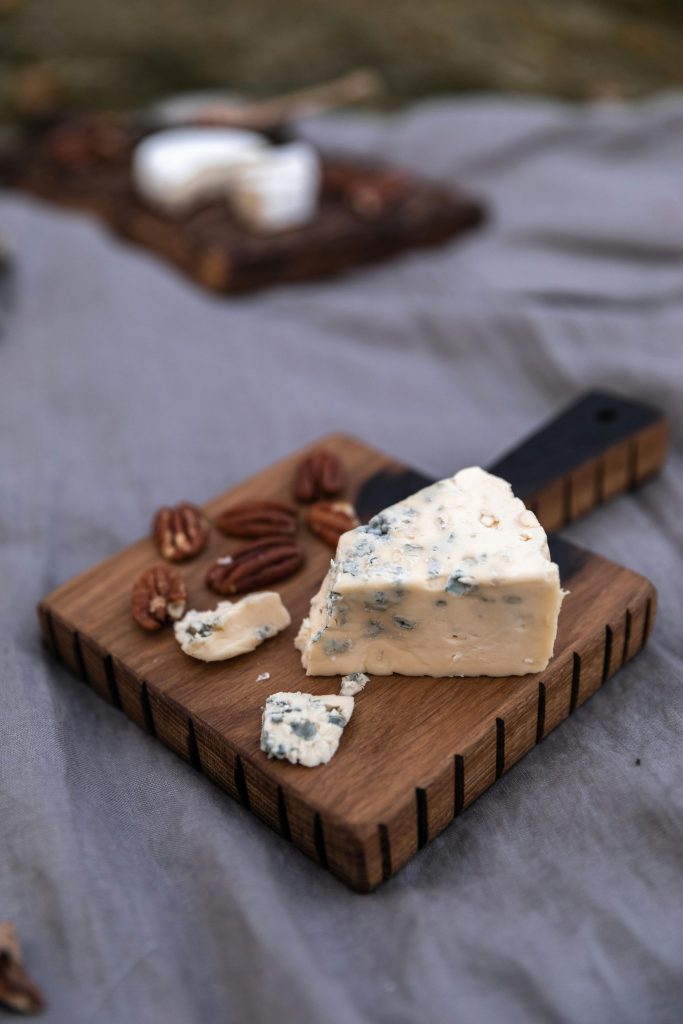
Now, before we all order your dogs a double puppuccino at Starbucks, not all our dogs will have this gene! Most commercial dog milks are based on goat’s milk, not cow’s milk, as that is much more likely to be tolerated. And before you go sharing your cheese board, you should never give your dog blue cheese!
The fungus involved in making blue cheeses such as Stilton can produce a substance called roquefortine C, which dogs can be very sensitive to. If your dog ingests this, they may vomit, suffer from a high temperature or even experience seizures. If your dog pinches blue cheese, contact your vet straight away.